

Obsessive Compulsive Disorder
An attempted personal explanation

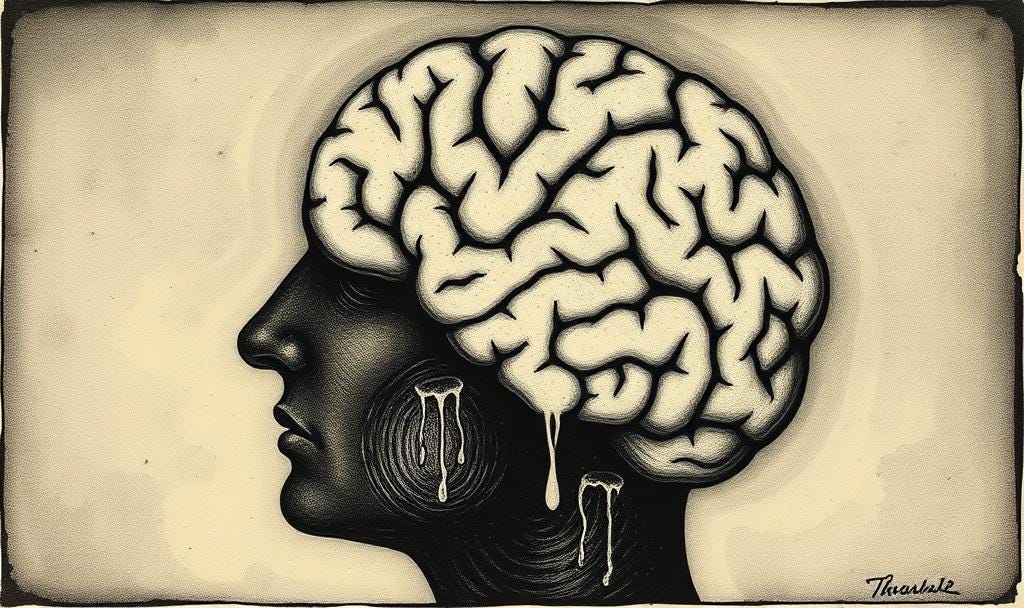
Explanatory
I have made a conscious effort to write portions of this essay (specifically after the preamble) in a stylized version which I hope emulates the racing thoughts so associated with Obsessive Compulsive Disorder. I have admittedly cribbed from the prose stylists I love the most (Robinson, Wallace, Caro, et al) in order to try to add a sheen of art and beauty to these otherwise troubling recollections.
Even though I suffer from Obsessive Compulsive Disorder, I am able to have a relatively normal day to day life. In the scheme of things, I know how lucky this makes me.
I hope the following helps someone feel less alone.
Preamble: Two Different Meanings
Near the end of 2011, I was diagnosed with Obsessive Compulsive Disorder. I was 29, and felt the diagnosis was a confirmation of something I had suspected for quite some time.
Obsessive Compulsive Disorder (OCD) is a term bandied about quite a bit, but I’m not sure people understand exactly what it entails. Outside of mental health circles, OCD is often used as a short hand explanation for someone being particular about this thing or that. Therefore, it has become a term that seems to have two meanings: first, it’s actual medical definition, and second, the cultural shorthand for someone’s peculiararities.
According to the Mayo Clinic:
Obsessive-compulsive disorder (OCD) features a pattern of unwanted thoughts and fears known as obsessions. These obsessions lead you to do repetitive behaviors, also called compulsions. These obsessions and compulsions get in the way of daily activities and cause a lot of distress.
Ultimately, you feel driven to do compulsive acts to ease your stress. Even if you try to ignore or get rid of bothersome thoughts or urges, they keep coming back. This leads you to act based on ritual. This is the vicious cycle of OCD.
An example of what I’ll call the “Pop Culture’ version of OCD (an example that is, admittedly, somewhat dated):
You’re at work, and you walk over to a coworker’s desk, and for some reason, this co-worker still has a filing system of sorts, something that seems very intricate. You being a curious person, you reach for one of the folders and your co-worker, who has been watching you suspiciously, snaps into action, grabbing one of the folders from you and placing it back in its spot just so before looking at you with a sheepish grin and saying something along the lines of: Sorry, I’m really OCD about my folders.
I’m all for economy of language, but it’s important to differentiate between these two meanings.
When it comes to my experience, which I’m hoping to explain in service of not only clarity, but more importantly, to help people understand this suffering and help someone, somewhere feel less alone, I’ll sum it up this way:
I’m not OCD about folders, I’m OCD about life.
Because I am.
So then, outside of the medical definition and the antiquated folders example, what is life like for someone suffering from Obsessive Compulsive Disorder? That, too, is complicated.
Obsessive
Mental health struggles isolate us. When I was a child, I spent a lot of time alone. This was not because of any sort of neglect, but more so my sister’s intense desire to be as far from me as possible, and my parents having jobs. I would be in the living room of our small house, watching the Cubs on the television, swinging my wiffle ball bat, imagining the length and breadth of my home runs while also feeling the warm and cozy feelings that came with hearing Rhapsody in Blue play over United Airlines commercials, thinking of sitting in my grandparents’ living room and watching grandma scratch out the score of each game, pitch by pitch, out by out, inning by inning.
When alone, I would long for those comforting times and turn and look out the large living room window, the very same window I had crawled under when I was in fifth grade, hiding myself from what I presumed to be a world of kidnappers, just waiting to get a glance of me through the window so they could scheme and take me.
One of the times I was crawling under that window, my babysitter, sitting up and letting the sun from the same window warm her, looked at me with a concerned look and asked me what it was I was doing, and how was I supposed to tell her that I was doing this because I had a dream that I was kidnapped and could not get those intrusive thoughts out of my head. I was all consumed every time I left my home, one example being on a big long yellow school bus during a day field trip, looking out the window to my left and then over the heads of my peers to the window on the right, always keeping my antenna up and my shifting eyes looking for that person who was going to take me away from my family, my stability, my hope. So, I likely made something up. Maybe I said it was a game I was playing. Or maybe, in trying to recollect the best version of myself, I told her straight up that I was afraid of being kidnapped, and when she went from confused to bemused, I crouched there and reiterated that I was doing this because I was genuinely afraid, that my brain created this monstrous possibility of my being taken, and that I had no idea that I was not the only one who felt this, or that these were in fact intrusive thoughts, and not the reality I was shrinking away from so much that I was crawling under windows and watching life pass me by as I was afraid that same life was going to be taken from me. I was ten.
Or how about that time I was in the Philippines for work? On a weekend snorkeling adventure, I was so certain a sea urchin had bit me, and upon learning these were poisonous bites that could kill me, I threw up over the side of the boat (the Bacardi 151 mixed drink and easy sway of the boat most certainly contributing), commencing a horrific two to three weeks in which some sort of red contusion was forming on my foot — the very same foot that likely had been poisoned by the sea urchin — and the absolute certainty (certainty is one of the key words when it comes to OCD, and anxiety in general) that this growing red area, becoming more and more painful with each passing day, was in fact the initiation of my demise.
My long suffering sister, she who is competent in many things medical (though she is not a doctor) receiving one picture after another of the bottom of my foot, finally muting her protestations knowing that it would do little good. Her little brother — he the terrified little boy who followed her around for so many years — was certain (there’s that word again) that his life was coming to an end, all alone, halfway across the world. She was patient and looked at each picture, trying to calmly let me know it did not look like a sea urchin bite (do those have a look?) and was likely just a blister of some sort. The narrative in my mind already six steps ahead of her measured reassurances, I scoffed at her inability to see that her only sibling was set to expire and there was nothing to be done about it.
My limp became more pronounced, and when I inquired with the hotel about local medical assistance, they sent up a hotel doctor, something I wasn’t aware existed before, to take a look at my foot. He put his arm around my shoulders as he gently asked me to lift the afflicted foot up for inspection, his fingers kneading my small shoulder muscles, before he gently affirmed my sister’s diagnosis — this was a blister of some renown, likely from the intensely tight way I was tying my shoes and then sprinting on a treadmill, hoping to exercise the demon narrative that ended with me dying alone of sea urchin poisoning. This was not, in fact, a sea urchin bite, nor would I need to worry about any initial injection of poison working its way through my cardiovascular system to my beleaguered heart. He poked it with a pin, and the pain was nothing compared to the preceding weeks’ absolute certainty that this was how it would end, with a fucking sea urchin bite, and as he rubbed my back and looked in his bag for a bandage of some sort, I stared at my foot, the object of my obsession for the last however many days and realized that it’s possible that maybe this was not a sea urchin bite, but was maybe just a blister, and knowing what I really wanted in the preceding weeks was an assurance that I was okay, that I was not other, that I too would be accepted in day to day life and be able to live without a sense of fear and foreboding. Upon the puncture, the blister started to heal. While my heart was not poisoned, it was still working its way out from under the weight of a life of obsessive worry and constriction, trying to get back get to the starting line of life, somewhere I had not been for some time now, maybe ever. I was 32.
Then there was the time as a kid I had began to obsess that I might hurt someone. It was the last thing in the world I wanted and yet, there it was, presenting itself over and over again like a flashing neon sign of doom I was hurtling toward, so much so that it colored my every interaction, giving once again a weight to my movements through life, as if I was underwater and trying desperately to get to the shore so I could lift my head up and take one more deep breath in the real and normal world, a world in which I would be who I wanted to be, that being, among other things, a boy who would never hurt anyone, who was assured by those who loved him, accepted by the world that so terrified him.
Standing in the thicket near our driveway, I looked at my friends on the driveway and wanted to scream out, I’m so afraid I’m going to hurt someone; instead just looking at those around me, my eyes older than I would ever be, that same leaden weight which stifled my movements along with my own emotional development, unable to articulate the blanket of dread which seemed to have infiltrated all of my cells, defining me in the exact opposite way I hoped to be defined, alone and sick and outside looking in.
Walking past everyone, telling them I needed to run inside real quick, I took my quickening heart beat and heavier footfalls into the house where I knew my mother was likely cross stitching and watching television, which she did in one of two places — in our living room or in her bedroom, the two places with televisions in our tiny house. Walking in the back door, past the washer and dryer, clumps of dryer lint atop the endlessly full trash can, and then through into the kitchen which, due to the size of the house, meant I could also see the living room, a living room quiet — too quiet by a long shot, quiet being another mortal enemy of the OCD sufferer — and empty. Walking past the kitchen table, I turned left toward another doorway, and then a quick right into the only hallway in the house, at which my mother’s room was on one end. I knocked on the door and she invited me in. I had been correct, she had a string in her mouth as she picked at a knot or obstruction of some sort, giving me a quick glance before going back to the small work her fingers were troubling themselves over. I took a deep breath and proceeded to tell her I was afraid I was going to hurt someone. She looked at me, confused and concerned, her only son, her youngest of two children, standing in front of her and proclaiming he was afraid he was going to hurt someone, leading her to the most logical question (logic being mostly absent from this story up to this point) of “Well, do you want to hurt someone, Kevin?” An easy question on the surface, but unfortunately missing the whole point of the terror, which is that what I had imagined was fate, an almost calvinist fervor that what I most feared is what I would become. I tried to explain to her that I didn’t want to hurt someone; it was, in fact, the last thing I wanted, and I wish I could stop thinking about this, could think of anything at all, including the now jettisoned fear that I was going to die in the electric chair*. This was another pillar of my childhood thinking — yearning for the fears I had seemingly moved past, wishing I could just worry about those instead of the ever present and doom laden terror of the moment, forgetting, of course, that when I was worried I was going to die in the electric chair, (a fear that had an alarming staying power for a boy with no criminal activity or murders to his name) it had consumed me whole, becoming like another appendage which I longed to be removed, if only for the anesthesia that would need to be applied in order to knock me out for the unwanted growth’s removal.
I tried to repeat to my mother that the last thing I wanted to do was hurt someone. I was mortified that I was even having these thoughts, and I would be most appreciative if she could go ahead and reassure me that I was not going to hurt someone, that the nauseating thought of the worst coming to fruition was just another staple of my very own comorbidity, Obsessive Compulsive Disorder (though I was much too young and ignorant to understand that this was yet another flashing sign of OCD). My mother, no stranger to depressive and anxious struggles, still seemed perplexed. Here I was telling her I didn’t want to hurt anyone, wanting desperately to never do that, and then following that quickly with a breathless declaration that I was horrified the very thing I so deeply feared was going to be my reality unless I… what? I didn’t know, but whatever the solution was had to begin with the reassurance of my mother that I am not abnormal, that I would not cause harm or become the worst version of myself I can imagine. Was it as simple as that? I just needed to be assured by someone I trusted that I was not going to do the very thing I was so certain I was going to do. I could have easily thrown up right there, as the blue television light found the new recesses of my mother’s youthful, sad, beautiful face. I was approximately 12.
These examples — but a few of many — are what my experience with Obsessive Compulsive Disorder looks like. It is an internal battle that is nearly impossible to describe, though I am trying at great length to do so here, my own admiration of economy of language going out the window some three paragraphs ago (at least). Among other things, what ties these examples together is the absolute certainty with which I believed them, along with the almost Pavlovian need for assurance that I was not what I imagined myself to be. But it wasn’t just that. It is never just that. It is a whole universe of unease and the desperate attempts to hide these strange, shameful thoughts while also trying to solve them. I have spent most of my life dancing on the head of this pin, looking left and right, seeing no angels to save me, looking down and seeing nothing but a haze of eternal falling. And here we see again the pernicious isolation that comes along with obsessive rumination which inevitably leads to coping mechanisms (compulsions) that have their own private rules and shames, used as brief snatches of respite from the obsessive thinking that, among other things, defies all classifications in the moment in which they are most yearning to be isolated and defined.
Compulsive
What about these compulsions? Mine have to do with numbers, the number 16 above all else, and also with the symmetry of things, including the symmetry of the emotional pangs in my body being somehow exactly equal between the two sides of me, the left and right… but then it’s not just that, it’s about the internal rules that come with what I mean by symmetry, what I will accept as balanced and what I will continue to deem insufficient in terms of alleviating this obsessive unease within me.
The number 16. This came to me when I was 14 and realized I would, within the next two years, upon turning 16, be driving. At this point in my life, this was a huge milestone and somehow, this cemented the number in my head. Ever since, many of my compulsions have revolved around the number 16. I count my steps in increments of 16. And while I’m certain there are times I forget to do this, it is a somewhat constant feature of my brain, often looking down at the sidewalk and making sure that I finish my sixteenth step (always on my right foot) before crossing to another square of sidewalk to begin again at one.
But it’s not only my steps, it’s also how often I touch things, and how often my pinkies touch my palm, especially when I am anxious, which is to say, awake. Externally, I need to touch door handles with my left hand first, and then after my right; if I am able to follow this simple formula, I feel a temporary satiation. I think that I’m hiding this well, but I can guess that is likely not the case. Even when I’m coming home with some groceries, I will shift the burden to my right side so I can touch the door with my left hand before shifting the weight back to the left so I can touch, and open the door, with my right. This whole left/right thing has been a compulsion of mine since I can remember; and it’s really important that I end each count of 16 on either my right foot or hand; however, I can start on my right foot or hand, as long as I at least hit one of the 16 instances with my left side. I don’t know if I have a clear explanation for why this is, other than to say when I accomplish this I feel a calm somewhere internally, if only fleeting, as evidenced by the fact that I just start all over again, ad infinitum.
I touch my palm with my pinkies because it is easy to hide. At least that’s how it started; now it’s as if I am able to touch my palms with each pinky and then count to sixteen, somehow differentiating what side I’m counting on, always ending on — say it with me now — the right side. It’s as if the flexing of the finger muscles, the resistance of finger to palm means something is happening here, though you don’t know what it is, do you, Mr Jones?**
One of the reasons I have so many compulsions is that I engage in near constant “Magical Thinking”.
According to NOCD:
Magical thinking involves compulsive urges and actions […] that are done to keep certain bad things from happening, though they have little or no connection to these feared outcomes from a rational perspective.
Even if the person logically understands their fear and rituals are not connected or rational, the fear of causing oneself or another person harm is so great that they’ll engage in their compulsions just to be sure.
Magical thinking OCD may also worsen after hearing about a tragedy. A person may feel they are responsible for a tragic event because they did not perform a specific ritual years ago. This will cause them to rely more heavily on their compulsions in an attempt to prevent more future negative events.
I employ magical thinking so often you might as well call me The Amazing OCDeenee. I often will have a thought in my mind, something like: Kevin, if you don’t touch this door with your left hand before your right hand, something bad is going to happen. This creates an extreme sense of unease, an unease that can only be alleviated if I do what I have prescribed myself to do. One might ask: Why do you prescribe these things for you, Kevin? And I suppose my answer is, I don’t think I have a choice. Maybe it’s rote behavior now, I’m not sure, but it has become so engrained that I believe if I were to try to change or update this behavior, it would lead to further compulsions to make up for the changes I’ve made in my thinking patterns, further complicating my day to day experience, adding one compulsion after another until one day, someone will look at me, see the exhausted look on my face and ask where my exhaustion and lost look come from, and I will try to explain the compulsions, to a point, at least until I am likely interrupted with a question about how far back these compulsions go, and not being able to give a solid date or time of the expansion — rather ironic in the scheme of things*** — I’ll simply reply, It’s compulsions all the way down while, likely pushing my pinkies into both of my palms to calm down whatever unease discussing my compulsions will create. And on and on I will go until, I suppose, my death.
There’s a popular saying: The only constant thing in life is change. I would not presume to speak for all OCD sufferers, but speaking for myself, I can let you know that constant change is not really ideal to rolling back compulsions like they are mattress prices over Labor Day weekend.
Earlier in life, one of my compulsions was to constantly organize my books and movies, making sure they were all the same distance from the edge of the shelf, turned the same way, etc. For whatever reason — perhaps exhaustion and perhaps all these pills I’m on, or both! — these organizing compulsions have abated to a point. Funny, isn’t it — organization is often a good thing, and that’s the compulsion I’ve decided to let go while I continue to count to myself on “both sides of my body” (Whatever the fuck that means) while pushing my pinkies into my palms.
Take my earlier collection of VHS tapes. My collection began when I owned five movies on VHS, boxes I would arrange in front of the stereo receiver in the living room, backing away to judge if they are symmetrical enough in their presentation, feeling that same warm calm when I realize each box has little to no scuffs or bends, knowing that those box corners are at least one thing I can control in this world. And my mother coming into the room and scoffing at such an extravagance of owning these five films and how she hoped that was where I would be stopping this foolish attempt at collecting and a part of me actually thinking that maybe these five would satiate my need for collection and order, though never really believing it. Fast forward a few years, and now take a look at the white built in shelves in my now bedroom, previously my sister’s before she moved out, and how there are now actually over 100 VHS tapes there, all with their non connecting spines (meaning the part of a VHS box that is a combination of two sides, which then has the one seam, something that to my eye and tactile sense seemed unkempt and disorderly); but then so, the spines of the VHS tapes with no seam, all exactly aligned, one row after another, the expansion of what I control in this world combining with my ever present love and need for art that stimulates me, that makes me laugh and feel and cry, that comes at my self imposed isolation from yet another angle, one that, again, is within my control, something with rules that I have created and can easily abide by. I tried over and over to explain this to my family, my sister most of all. She would come home and walk into her old room and walk over to my beloved movies, straightened just so, and push this movie back and pull another forward, not knowing that when she was doing that it was like she held a voodoo doll of me and was poking at all my assured certainty and control, lifting my nerve endings up just enough to make me aware they are alive and now out of place. I tried to ask her to please stop doing that, but she and I have always poked at the easiest terrain of annoyance on the other, and she simply laughed at me and pushed a few more of those movies, going so far as to lift a few up and turn them around with the seams out, causing me to catch my breath while also trying to form the words about why this was such a troubling development for me, why it made me once again question the reality around me. I couldn’t tell her this was about control because I did not understand it was about control. I thought it was about order, and of course it was, to a degree, but that order was in service to control. Internally, control was unattainable, or so my thoughts told me, and so I reached for these collections, for these attempts at symmetry, for the counting of my steps to provide me with something I seemed to be lacking at the core of me. This leads to the internal frustration at the obliteration of perceived control, thus opening up some vulnerability in me I had so assiduously attempted to barricade. To reach into those recesses of ourselves, we peel away layers of scar tissue built up over the countless moments of life.
Disorder
The pharmacological component of this is as much a part of me as the anxiety itself, which in and of itself is likely an indictment of western medicine. I started out prescribed paxil for these ailments, ten milligrams to be exact, on June 23, 2000****, leading me to come home and use the private phone in my room — itself left over form when this was my sister’s room — to call my then girlfriend and, laying at the end of the bed, one hand holding the phone while the other arm was laid in front of my on the bar of the bed, a spot that quickly became a warm, welcoming spot upon wihich I laid my head. With my eyes closed, I talked to my girlfriend and held back tears as I tried to explain to her now that I had these pills I would be better, would, in fact, be able to love and receive love, because when in the history of time did a medical prescription ever fall short of expectations. Just as this was my first day of being medicated, it was the first of many times I would tell a significant other how ashamed I was about who I was, going so far, too often, of projecting that shame onto her, demanding the same assurances I asked all others for, but without the confidence I had in other instances because love and lust are vulnerable things, all underbelly, nerves upon nerves, each one leading directly to the deepest root of my heart. To put that on someone else, over and over, is a shameful thing indeed, but at what point am I able to forgive myself for that? Maybe that’s why I write: it is an act of self forgiveness. Or at least I hope it is.
Like everything else in my mind, my attempts at love have been undercut by Obsessive Compulsive Disorder. This is not to say that I do not take responsibility for my actions, something I certainly try to do, but I am still realizing the long reach of these obsessions and, to a lesser degree, compulsions on my romantic relationships. Obsessive Compulsive Disorder is about a lot, but near the top of the list is fear. When I am in a romantic relationship, I am so consumed with the fear that I’m going to be left that before I know it, I am telling myself stories about why she will leave, how she will leave, when she will leave. To state the obvious, this is in no way fair to the other person, creating stakes that she either is not aware of, or, if I’m made her aware of the fears, is not able to abate because with my anxious need to control situations, I have not allowed the one person who can relieve me of this anxiety to actually have any control in changing it.
Sometimes I wonder if the word “regrets” was created in order to fill out the two word phrase: No regrets. I like to say I don’t have many regrets, but if I think deeply about this, that seems less than a genuine sentiment. In truth, I have many regrets, often stemming from the roiling emotions within me leading me to overflow with pain, fear, and anger, all three of these things being born of the very obsessions I am desperately trying to alleviate everyday. I am 42 and I am alone. I say that not as an elicitation of pity, but to state that I have my challenges when it comes to externally expressing the internal turmoil I experience in a way that is healthy. Obsessions create distress, and when I am obsessing about my romantic relationship, the distress of what I am afraid of (being left) becomes so intense internally that I have to let it out in some way, and since I am not able to ask the other person to perform the compulsion to alleviate the unease, I tend to become overwhelmed with the certainty of the fear that I am going to be left, and, since obsessions are not simply thoughts, but stories we tell ourselves, the fear can get out of hand in short order.
The pop culture version of OCD (“I’m OCD about folders,” etc) is often focused on the compulsion (organizing the folders), totally eschewing the obsessions themselves. The obsessions and the compulsions are both troublesome, but it is the obsessions and the attendant unease which leads to the magical thinking and the compulsion. Therefore, to water down a complex disorder as a throwaway joke about organization is kind of missing the whole point here. Far be it form me to tell anyone to not joke about something — that would go against pretty much my whole core — but I think it is worth pointing out that citing the punchline (compulsions) without the set up (the obsessions) would lead one back to joke writing 101. This isn’t to say that people do not have peculiarities, of course they do, but it is to say that a fuller understanding of the elemental suffering caused by OCD is left by the wayside in service of a quip.
So we come to the end of my attempt at explaining my experience with Obsessive Compulsive Disorder. The great irony need hardly be stated: In search of order and control, portions of my life have become disordered.
While the compulsions are hidden — though certainly not as likely as I think they are — they are the supporting players in this drama, the lead role going to my obsessions, my long spiraling string of thoughts weaving both reality and perception, at least internally. While I in no way believe in the Biblical representation of demons, I can safely state that intrusive thoughts are demons, bulbous and reaching, awaiting a savior that is never going to come, at least as long as I do not accept who I am and continue to define myself by these shortcomings instead of loving these shortcomings and turning them into a ripe target for humor and mockery, and by extension, acceptance. So perhaps then that is the answer: acceptance and love.
Wish me luck.
——————————————————————
Notes:
*To the best of my recollection, my bizarre fear that I was going to die in the electric chair stems from a TV movie I was watching with my mother. In this movie, a character dies in the electric chair, and that being a, shall we say, unpleasant way to die, it wormed its way into my thinking, consuming me whole for a long period of time. Though I could definitely be remembering this all wrong, since what type of television movie from the early to mid 90s would feature a character dying in the electric chair? A pretty fucking metal one, that’s what!
**I have decided to not go into my artistic obsessions^ in this essay, but please be assured that I am rather obsessed with Bob Dylan, of which these italicized words are a snippet of a song, “Ballad of a Thin Man”, which is not about me, as much as I wish Dylan wrote a song about me, even one that is so dismissive.
^Don’t even get me started on The Beatles. I’m sure you have places to be.
***I have a thing with dates.
****See?
Thank you for your vulnerability in sharing this, Kevin!
A compelling narrative of life with OCD.